
🚀 NVIDIA’s Big Move: Opening Up Models and Data for Language, Biology & Robotics
In a major strategic step, NVIDIA has unveiled a suite of open-source models and datasets covering three critical domains of artificial intelligence: language, biology (bioinformatics/biomedical AI) and robotics. According to NVIDIA’s blog, the goal is to “contribute to an open ecosystem that broadens access to AI and fuels U.S. innovation.”
With AI development rapidly advancing, access to high-quality models and datasets has become a bottleneck for many researchers and startups. NVIDIA’s move to release open assets signals a push toward democratizing AI, enabling more players to build on top of cutting-edge work instead of being locked out by resources or licensing.
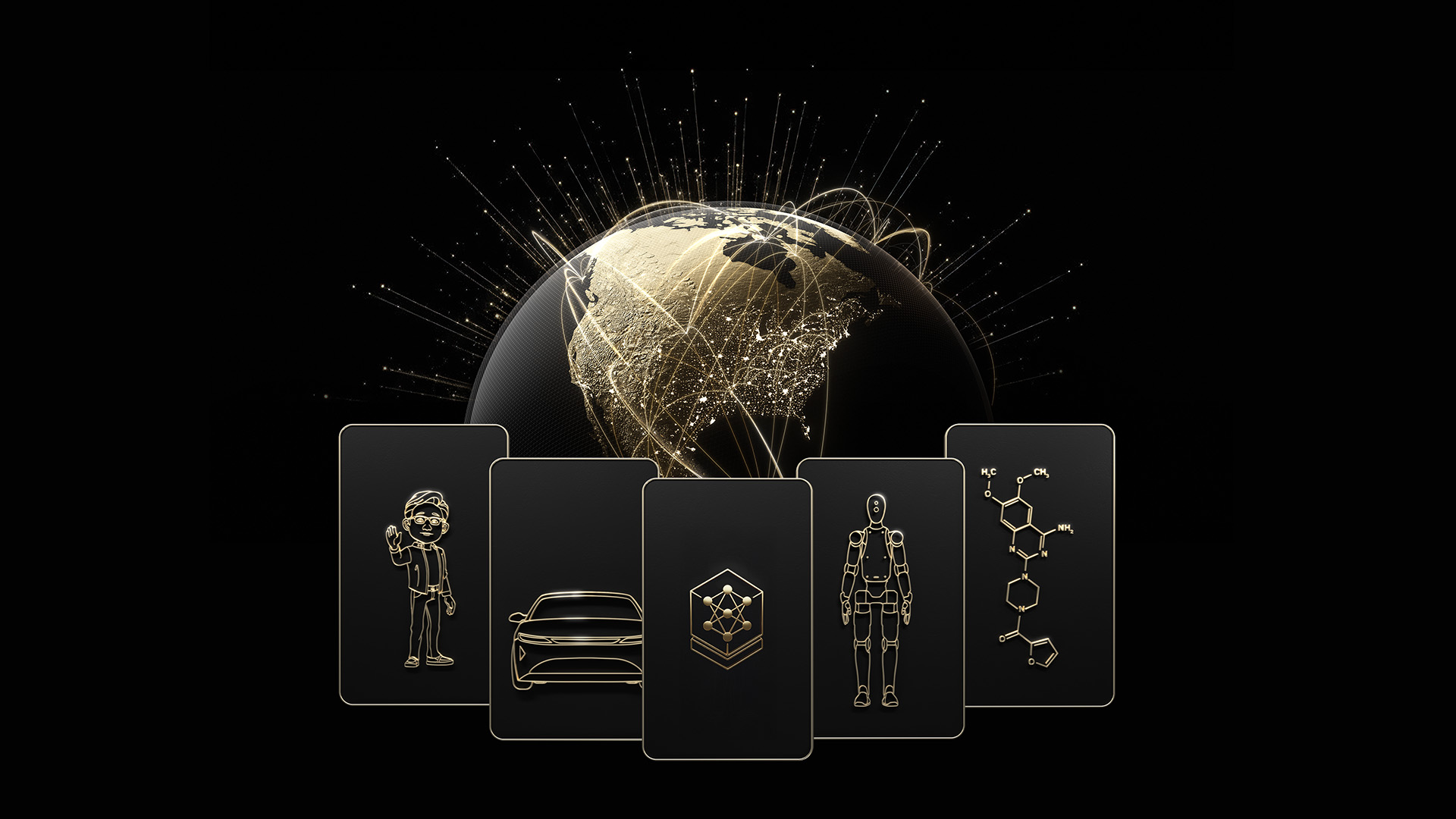
📚 The Model Families and Data Ecosystem
NVIDIA’s announcement highlights several new model families and dataset releases:
-
Nemotron – Focused on “digital AI” / language or general-purpose model tasks.
-
Cosmos – A model family aimed at “physical AI”, including robotics, simulation and embodied systems.
-
Isaac GR00T – A robotics-oriented foundation model for language-vision-action (VLA) tasks in robotics.
-
Clara – Biomedical/biology models and datasets released for research in healthcare, genomics and bio-AI applications.
-
Associated with these model families, NVIDIA is releasing open datasets and simulated data tools so that developers can train, fine-tune and deploy their own AI systems in these domains. For example, in robotics, the combination of simulation data and real-world robot trajectories gives researchers a path to accelerated training.
💡 Why This Matters: Implications for AI Innovation
1. Lower Barrier to Entry
By open‐sourcing foundational models and data, NVIDIA empowers smaller enterprises, academic labs and start-ups to build competitive AI applications without the massive compute and dataset investments traditionally required.
2. Cross-Domain Breakthroughs
Linking language, biology and robotics means we may see innovative multi-modal systems: e.g., a robot that can understand natural language instructions (language model) and manipulate physical objects (robotic model) or biomedical systems that leverage large-scale language reasoning on genomics data.
3. Accelerated Research & Industry Adoption
These open models allow faster prototyping. In healthcare, the Clara models can assist in diagnostics, drug discovery and genomics workflows. In robotics, the Isaac GR00T model enables generalist robot behaviours. This speeds path to market and may reduce reliance on proprietary solutions.
4. Ecosystem & Innovation Play
For NVIDIA, open-sourcing these assets also drives adoption of its hardware (GPUs, simulation platforms) and software stack (Omniverse, Isaac, Clara). It helps build a broader developer ecosystem aligned with its platform strategy.
🔍 Real-World Use Cases to Watch
-
Robotics & Embodied AI: With Isaac GR00T and simulation datasets, manufacturers and research labs can build robots that understand instruction-language, vision and action in unified frameworks.
-
Biomedical Research: Clara’s datasets plus open models could help accelerate genomics, medical imaging and biomed workflows, especially in under-resourced institutions.
-
Language Services & Agents: Nemotron may enable smaller organisations to build advanced NLP agents, chatbots or domain-specific assistants without building from scratch.
-
Simulation to Reality (Sim2Real): Cosmos-based simulation data allows robotics teams to train agents in virtual environments before deploying in the real world, reducing cost and risk.
🚦 Challenges & What to Watch
-
Quality & Generalisation: Open models are only as good as their training data and fine-tuning. The real test is how they perform in specialised or adversarial conditions.
-
Data Privacy & Ethics: Especially in bio/health domains, openness must not compromise patient privacy or compliance.
-
Hardware/Compute Demands: Even open models require significant compute for fine-tuning; smaller players may still face resource constraints.
-
Ecosystem Lock-in: While open, the models may favour NVIDIA’s toolkit and hardware — so users need to evaluate portability.
-
Commercialization & Licensing: Understanding how to build commercial applications using these open assets will be important (licensing, derivative works, etc.).
🧭 Final Thoughts
NVIDIA’s release of open models and datasets across language, biology and robotics marks one of the more significant moves in AI platform strategy in 2025. It signals a future where foundation models are not just locked behind large tech labs but are more widely accessible. For bloggers and tech watchers, this offers rich angles: “Robotics meets language models”, “Bio-AI democratization”, “What open models mean for startups”.
As the AI landscape evolves, access and openness may become as critical as model size and compute power. NVIDIA is placing a bet on that — and the industry is watching.